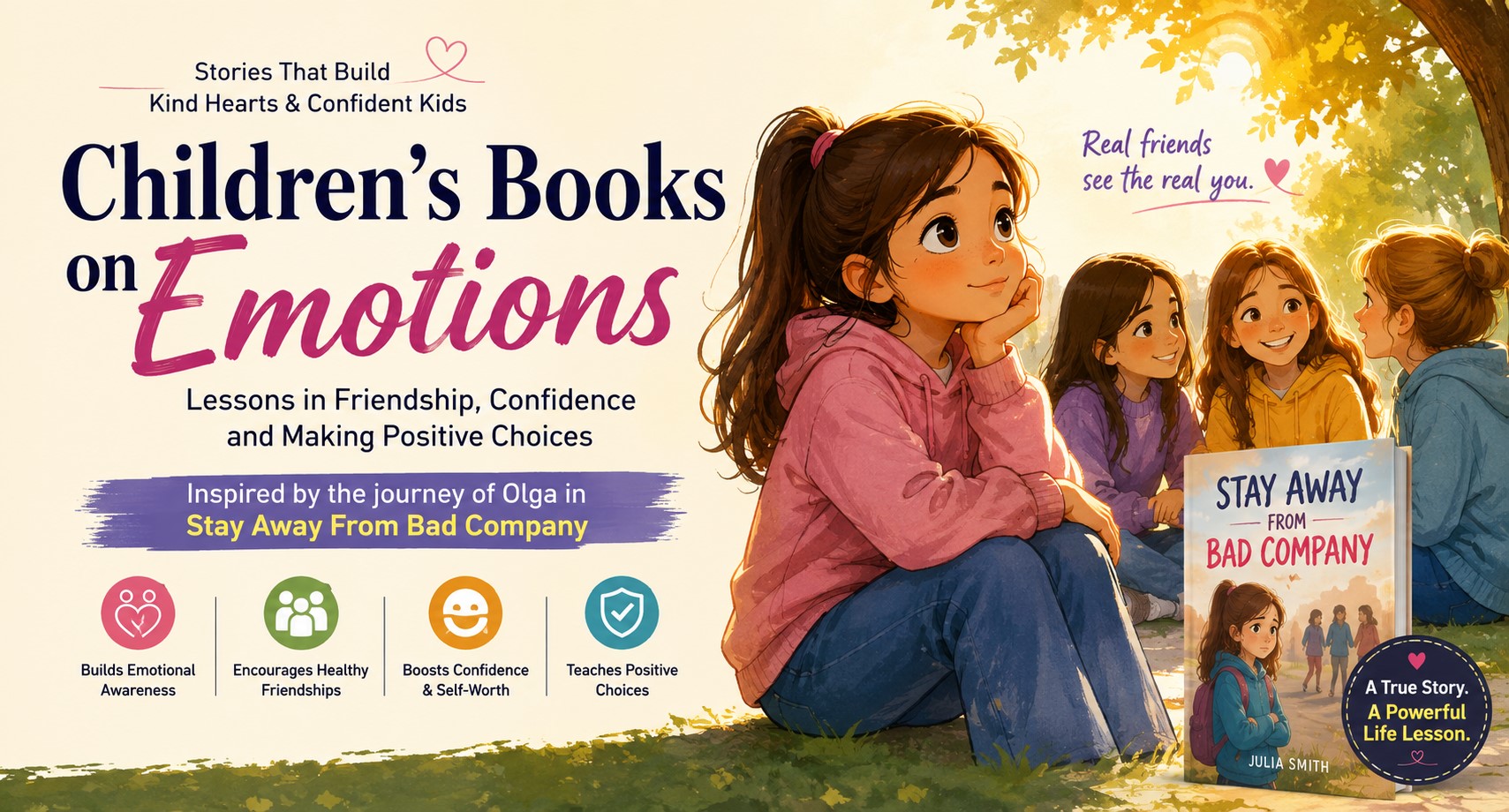
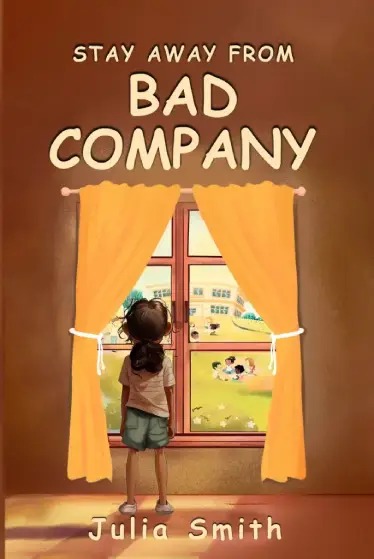
Friendship is one of the most valuable bonds we can build in life. It teaches us to know others and ourselves, to be patient, to care for and value those around us, and to find in true relationships a space to grow and be unique. Julia Smith’s Stay Away From Bad Company is a children’s books on emotions based on a true story.
Olga’s Lessons in Friendship: What Kids Can Learn
In Stay Away From Bad Company, we meet Olga: lonely, unpopular, and brave enough to change. How far will she go to be friends with Simona, who seems to have everything Olga doesn’t? Follow Olga as she navigates the highs and lows of friendship, discovering what it truly means to belong—and to be herself.
Olga’s World: Building Bonds That Last
Friendship cannot be bargained for and cannot be self-serving. In a world that runs at light speed, giving oneself the chance to take the time to meet another person and to introduce oneself will result in making a true friendship. With the help of Olga and her friends’ friendship, we learn how deep connections are made and why there are some friendships that become truly memorable.
Olga and the Language of Friendship
Olga finds there are many ways to communicate that go beyond words—sometimes it’s Simona’s gaze, or the way her friends walk, laugh, or cry, that tells Olga what they’re feeling. Learning to read these unspoken messages helps her feel truly connected and special. She realizes one of the most important parts of friendship: being loved for who you are, differences and all. Even in a world where everyone seems similar, Olga learns that a real friend sees you as truly unique—just as you see them.
Olga’s Friendship Rituals: The Little Things That Matter
For Olga, the little rituals—like waiting for Simona at the school gate or sharing secrets during recess—are what make friendship special. It’s not about strict schedules, but about the joy of seeing friends whenever she can. These small moments and regular chats help Olga’s friendships grow stronger, no matter the distance or differences.
Aside from the illustrations and simple language in which Stay Away From Bad Company is written, it may seem like a children’s book on emotions, but the truth is that it contains texts for people of all ages and themes so universal that they can be understood by readers from anywhere in the world and of any age.
Stay Away From Bad Company: A Guide to Children’s Emotions and Emotional Growth
If we observe our children on any given day, we see that they are on an emotional rollercoaster. They go from love to hate, from happiness to sadness, or from calm to anger, in a matter of seconds.
Actually, that’s normal: emotion, thought, and action are the pillars of our being.
The problem is that they often don’t know how to manage what they feel properly. They lack emotional intelligence. Fortunately, emotional intelligence is a skill, and like any skill, it can be learned and, of course, taught.
The Role of Children’s Books on Emotions in Fostering Emotional Development
Children perceive a great deal of information around them, although they struggle to organise it and make sense of it. This is where parental figures and the role of children’s books as a vehicle for their teachings come into play, helping them to organise and explain what they observe and feel inside.
Attachment figures function as “storytellers” of what is happening around the little ones. This function of describing and recounting what is happening, both externally and within their own bodies, begins from the moment they enter the world and are received in their parents’ arms. This is when they begin to develop their emotional education.
Parents help babies interpret their body’s emotional and physiological signals, as well as understand the phenomena that occur in their daily lives. All of this involves educating them about emotions, helping them understand what is happening to them and finding the reasons behind their questions.
From the moment a baby cries to express hunger or sleepiness, their mother or father is responsible for interpreting and explaining what is happening, as well as responding to their needs.
The baby doesn’t understand what is happening; they only feel pleasure or discomfort. This is the ideal time to tell them what is happening: “It’s okay, you’re hungry, and that’s why you’re crying. I’ll feed you right now.” This is a fundamental process. It is known as the process of mentalization, which consists of putting names to those emotions, feelings, thoughts, actions, and sensations.
Every child needs a responsible adult who provides them with guidance and gives meaning to what they are experiencing. Someone to translate for them what they feel physically (pain, hunger, sleepiness, anger, etc.) and what they observe in the outside world.
In contrast, emotional intelligence gives us social skills and the ability to: trust in our abilities, empathise with others, cope with obstacles, resolve conflicts constructively, make responsible decisions, and much more.
Key Benefits of Children’s Books on Emotions
- contribute to cognitive, affective, and social development.
- help build an emotional vocabulary.
- transmit values simply and dynamically.
- help develop self-concept, self-esteem, and empathy, as foundations for fostering emotional autonomy.
- versatile, allowing for adaptation to children’s needs.
- have no age limit.
- develop creative thinking, giving children tools to solve real-life situations in their daily lives.
- promote socialisation and the development of social skills such as empathy, tolerance, and cooperation.
- have an educational application with playful value, meaning they entertain and educate.
- contribute to meaningful learning, enriching intuitive experiences in their education.
In short, if we want our children or students to function successfully in society and, most importantly, to be happy, we must give them emotional intelligence so they can recognise, understand, and manage their emotions.
Julia Smith Stay Away From Bad Company shows that emotions aren’t just entertainment—they’re essential for children’s growth through Olga’s journey.