Friendship is a relationship based on affection, trust, respect, and mutual support between two or more people. During childhood, friendships help children develop social skills, strengthen their self-esteem, learn to resolve conflicts, and feel emotionally supported.
Through Olga’s Eyes: The Meaning Of Friendship In This Children’s Friendship Books
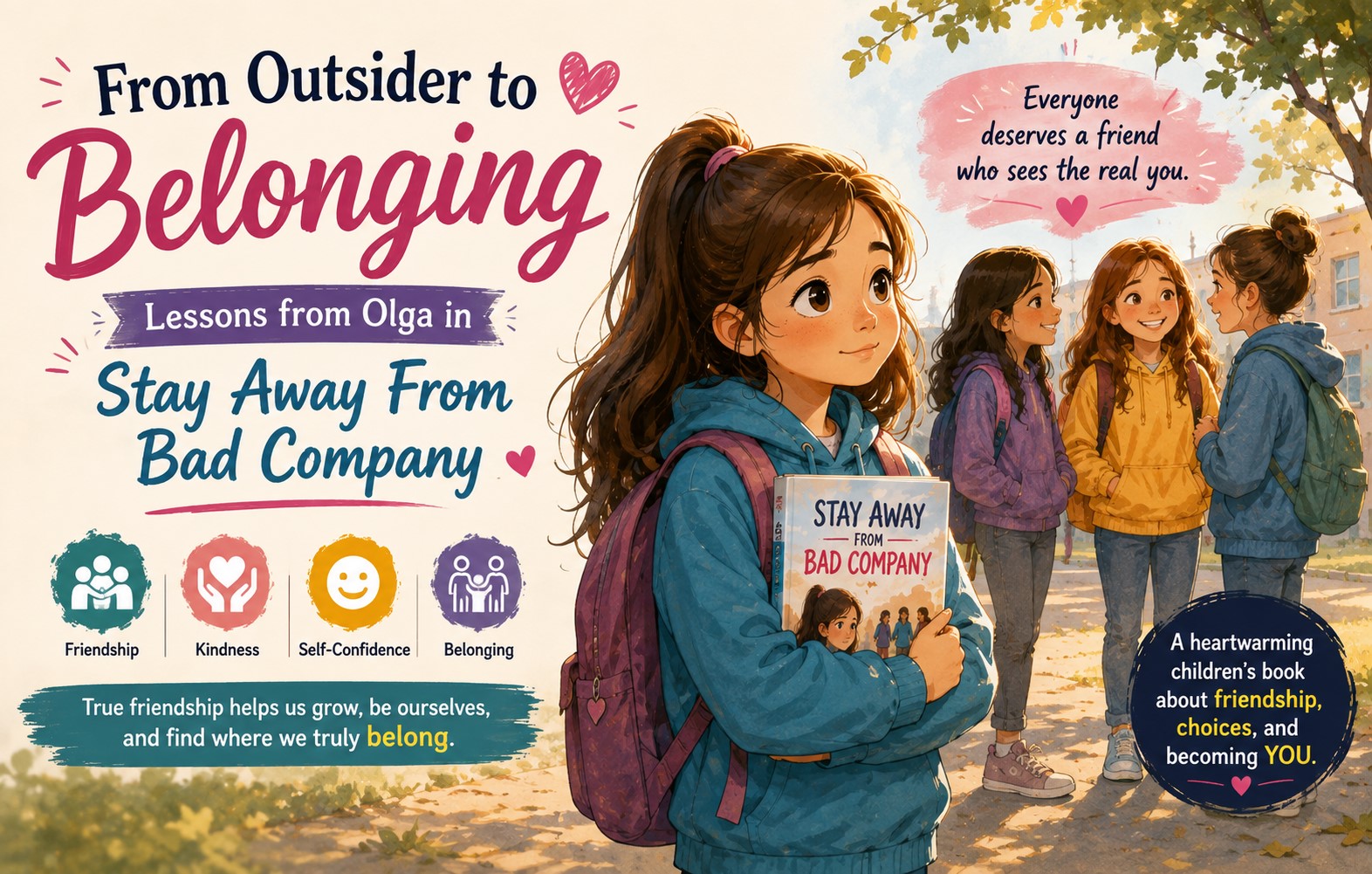
“Stay Away From Bad Company“ by Julia Smith follows Olga, a girl often seen as an outsider and unpopular among her peers. Longing for genuine connection, Olga is drawn to Simona, a charismatic figure who appears to embody everything Olga wishes she could be. As she pursues this friendship, Olga faces unexpected challenges that push her to reevaluate what friendship means and discover her own unique strengths.
With Stay Away From Bad Company, a children’s book about friendship, it is easy to explain what friendship is, what it means for children, the values that underpin it, and how families and schools can foster healthy relationships that contribute to children’s well-being and holistic development.
Drawing inspiration from Olga’s story, we see that friendship is one of the most important values we can teach children. Friends are a source of emotional support, make us feel happy, and help us grow as individuals throughout our lives. Here are some tips on how to teach children the value of friendship, using examples from Olga’s experiences.
What Is The Value Of Friendship For Children?
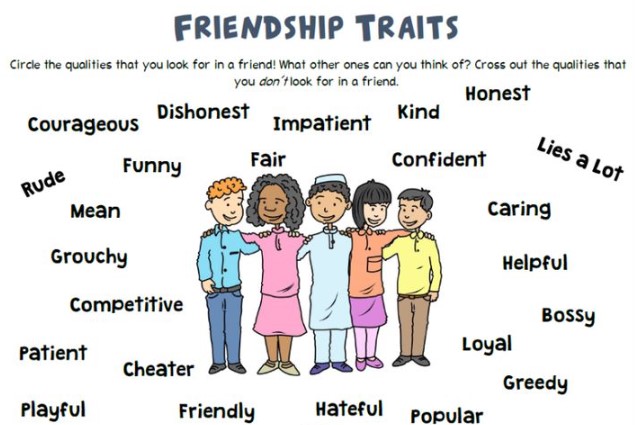
Like Olga learned, every child should understand what it means to have a good friend. Friendship is a value based on respect, empathy, communication, honesty, and loyalty. It allows children to develop social skills, grow emotionally, and feel supported and happy in their environment.
Friendship can be defined as a relationship between two or more people that involves giving and receiving affection, support, care, and physical closeness, among other things. Some of the foundations of friendship are trust, emotional support, deep communication, and acceptance of the other person as they are.
How To Teach The Value Of Friendship?
Teaching children the value of friendship, as shown in Olga’s journey, will help them form supportive friendships that can last a lifetime. Here are some tips inspired by Olga’s story to help your children learn about and value friendship:
- Promote respect and empathy.
Empathy and respect are essential values in any friendship. Olga’s story shows how important it is to respect others’ differences and to put oneself in a friend’s shoes to understand and accept them as they are.
- Promote diversity
Friendship knows no borders, and we must teach our children to accept and value diversity. When your children make friends from different backgrounds, cultures, and religions, they open their minds to other realities and learn values like equality.
- Promote honesty and loyalty
Honesty and loyalty are essential values in any relationship, so children should learn to be honest with their friends and to keep their word. Being honest and telling the truth is often difficult because it can hurt others. Still, it is necessary to learn to express our feelings and thoughts with sensitivity and tact to be honest without being cruel. If you want to teach your children to be honest, you must lead by example and show them the consequences of lying. You can also use games and books to help them learn.
- Boost self-esteem and self-confidence.
Self-esteem and self-confidence are fundamental for healthy friendships. Olga’s journey helps illustrate how discovering one’s own strengths can lead to more genuine relationships. Support children’s confidence by giving them autonomy and trusting them to make decisions, just as Olga learned to trust herself.
- Teach them to resolve conflicts peacefully.
Conflicts are part of any relationship, and differences can always arise. The key is knowing how to manage and resolve them. Teach your children to resolve conflicts peacefully, to find solutions that satisfy everyone involved, and to forgive their friends when they make mistakes.
- Be a good role model.
Children learn more from what they see than from what we tell them. Be a good role model for your children in terms of friendship by showing respect, empathy, honesty, and loyalty in your own relationships. They will observe and learn from your behaviour.
Why Is Friendship Important In Childhood?
Friendship is one of the most significant relationships during childhood. Through it, boys and girls discover how to relate to others, learn to manage emotions and build bonds based on trust and respect. Having friends not only contributes to your happiness, but it also plays a key role in your personal development.
- Emotional Development
Friendships help kids to identify, express and better understand their emotions. Sharing experiences, joys or worries with other people their age provides them with emotional security and helps them develop skills such as empathy and conflict management.
- Social Development
Friendship is one of the first opportunities to learn to live together outside the family environment. Through play and relationships with their peers, boys and girls develop fundamental social skills such as communication, cooperation, active listening and respect for differences.
- Well-Being And Self-Esteem
Feeling accepted and valued by a group of friends helps to strengthen self-esteem and self-confidence. Positive friendship relationships generate greater emotional well-being and help children better cope with the challenges and changes they experience during their growth.
The Role Of School And Family
Friendship is also learned. Both the family and the school play a fundamental role in teaching values such as respect, solidarity, empathy or cooperation.
Adults can help children build healthy relationships through example, dialogue and support. Creating spaces where they can share, play, and resolve conflicts positively favours the development of friendships based on mutual respect. Furthermore, the school is a privileged environment to promote coexistence and inclusion, helping all boys and girls feel part of the group and learn to value diversity as a wealth.
Thus, we will realise that our son or daughter is learning to create deep and lasting friendship relationships when he learns to share things with other boys and girls, when he does not fight, but rather seeks agreement, when he worries about his classmates or helps them if they feel sad or when he shows sincere love and affection for his friends.
To experience Olga’s thrilling journey of friendship, self-worth, and personal growth, read “Stay Away From Bad Company,” a one-of-a-kind children’s book about friendship by Julia Smith.